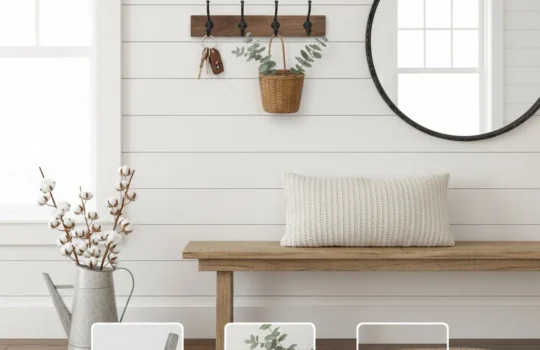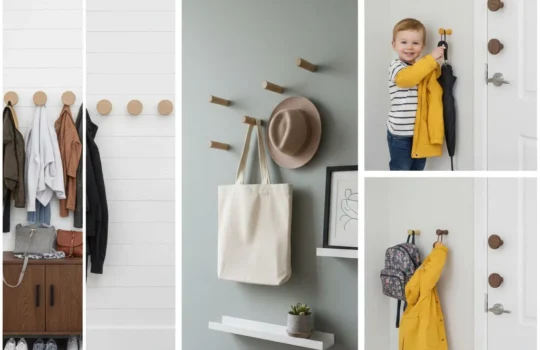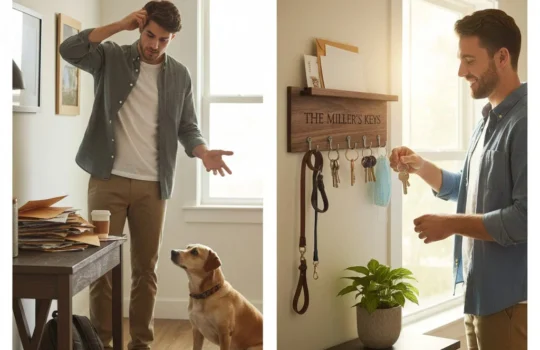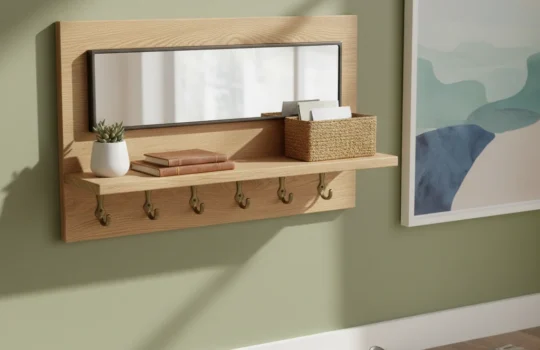
The entryway is the most hardworking area of any home. It is the transition zone where we shed the outside world—dropping our bags, hanging our coats, and tossing our keys. Usually, this results in a cluttered mess that is more “storage unit” than “sanctuary.” But what if your organizational tools didn’t look like tools? Here is how to blend your daily essentials into a stunning, curated display.
Why Mix Function with Art?
Most people treat their key holder as a standalone item, often tucked away in a dark corner. By bringing it into a gallery wall, you achieve several design goals:
-
Hidden in Plain Sight: When surrounded by beautiful frames and textures, the “visual noise” of hanging keys and lanyards disappears. It becomes just another interesting element of the wall.
-
Elevating the Everyday: There is a psychological shift when you reach for your keys from a beautiful display. It turns a mundane chore into a moment of appreciation for your home’s aesthetic.
-
Maximizing Wall Real Estate: In narrow hallways, you often don’t have room for a console table and art. This strategy allows one wall to perform two jobs perfectly.
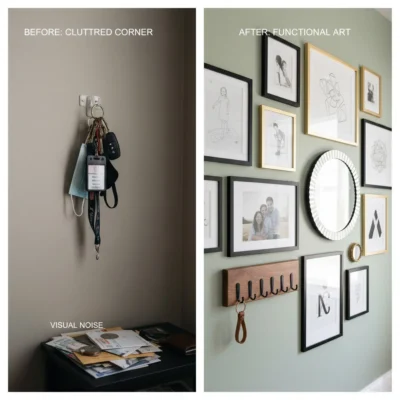
Finding the Perfect Balance
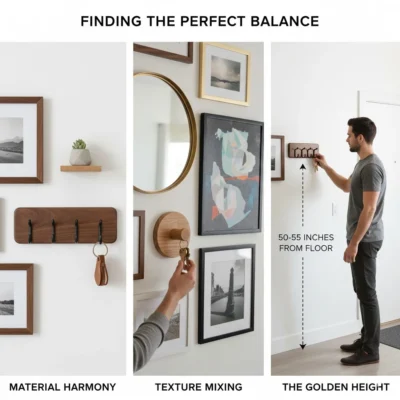
To make the integration feel intentional rather than accidental, consider these elements:
-
Material Harmony: If you choose a Walnut key holder, try to include at least one or two other wooden elements in your gallery—perhaps a wooden frame or a small floating shelf. This creates a cohesive “thread” throughout the display.
-
Texture Mixing: Don’t just stick to flat frames. The 3D nature of a wooden key holder adds depth. Contrast the organic wood grain with the smooth glass of a mirror or the soft texture of a canvas print.
Layout Strategies for Your Entryway
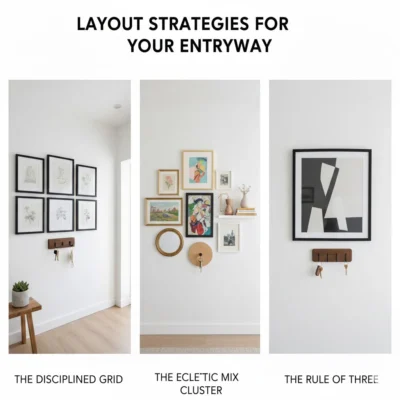
There are three main ways to arrange your “Functional Gallery”:
-
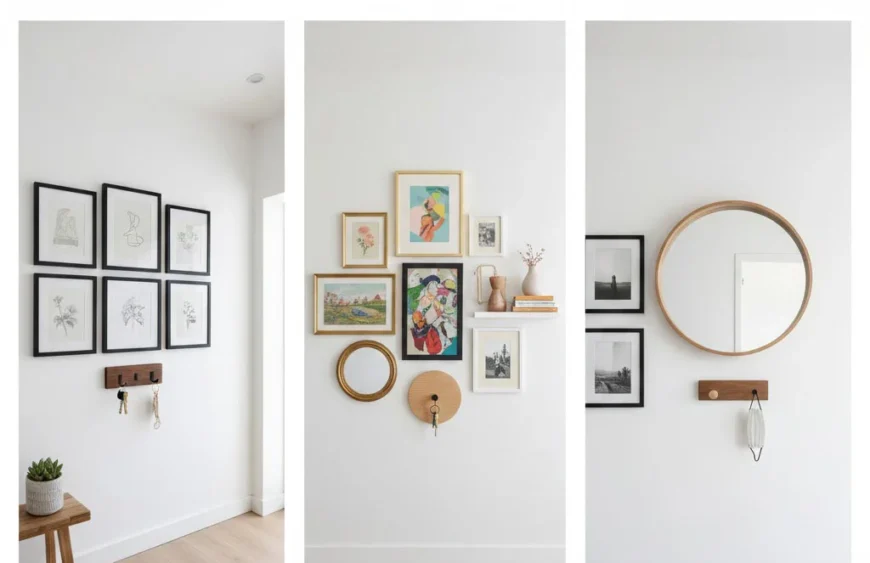
The Disciplined Grid: Arrange your key holder and 3–5 identical frames in a perfect square or rectangle. This works best for modern, minimalist homes where symmetry is key. Place the key holder in one of the bottom corners of the grid for easy access.
-
The Eclectic Cluster: Mix and match frame sizes, orientations, and even small objects like a wall-mounted vase. Place the key holder slightly off-center to act as an “anchor” for the more random elements around it.
-
The “Rule of Three”: If you prefer simplicity, use the power of three. Pair your wooden key holder with one medium-sized mirror and one large piece of art. It’s balanced, clean, and highly effective.
What to Include in Your Functional Gallery
A gallery wall is a reflection of your personality. To make it work in an entryway, consider adding:
-
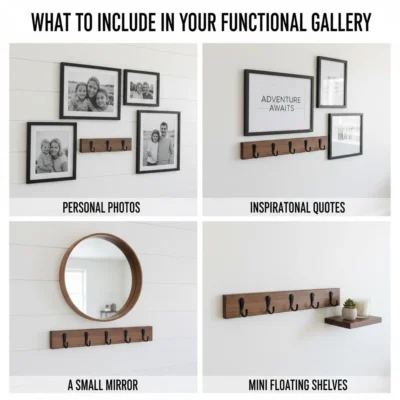
Personal Photos: Black and white family portraits add a timeless feel.
-
Inspirational Quotes: A small framed quote about “Home” or “Adventure” provides a nice send-off as you grab your keys.
-
A Small Mirror: This is essential for a last-minute hair check, and it helps bounce light into what is often a windowless hallway.
-
Mini Floating Shelves: Use these for a tiny succulent or a scented candle to engage all the senses as soon as you walk in.
Installation Tips for Success
Because a key holder is a high-traffic item, it requires a bit more care than a standard picture frame:
-
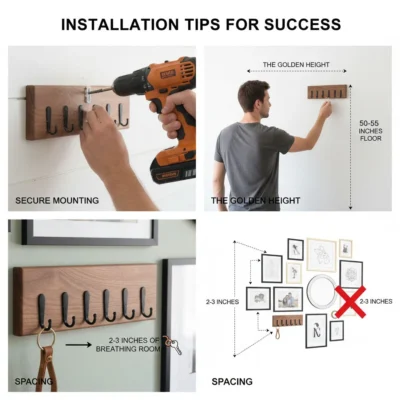
Secure Mounting: Unlike a painting that just sits there, you will be pulling on the key holder every day. Ensure it is mounted with sturdy screws and anchors.
-
The “Golden Height”: Aim for the “Strike Zone”, roughly 50 to 55 inches from the floor. This ensures the art is at eye level while the hooks remain at a natural reaching height.
-
Spacing: Leave about 2 to 3 inches of “breathing room” between the key holder and the nearest frame. This prevents the hanging keys from overlapping and hiding your beautiful artwork.
Conclusion
Your home should be a reflection of who you are, down to the very spot where you hang your keys. A handcrafted wooden holder isn’t just a place to put things; it’s a piece of the puzzle that makes your house a home. Don’t just organize your life—decorate it.